Lessons from 2025
Non-Linearity, The Games We Play, Side Questing
Foreword
Last year, I wrote my first public annual reflection. I wrote about growth, comparison, ego, agency, and the people who shaped my year. That introspection ended up mattering more than I expected, and it made something feel obvious in hindsight, this is a habit I want to keep.
If there is anything 2024 reinforced, it is that building in public works. The luck surface area is real. So here is my reflection for 2025.
Short on time?
Chat with my reflection on ChatGPT here.
Table of Contents
- A year that only makes sense in hindsight
- The Cost of Negativity
- High agency beats high potential
- Leverage is not the same as effort
- Games worth playing
- Environment changes
- Bad Advice, Good Advice, No Advice?
- Miscellaneous
- Outlook for 2026
A year that only makes sense in hindsight
Here is what my year looked like.
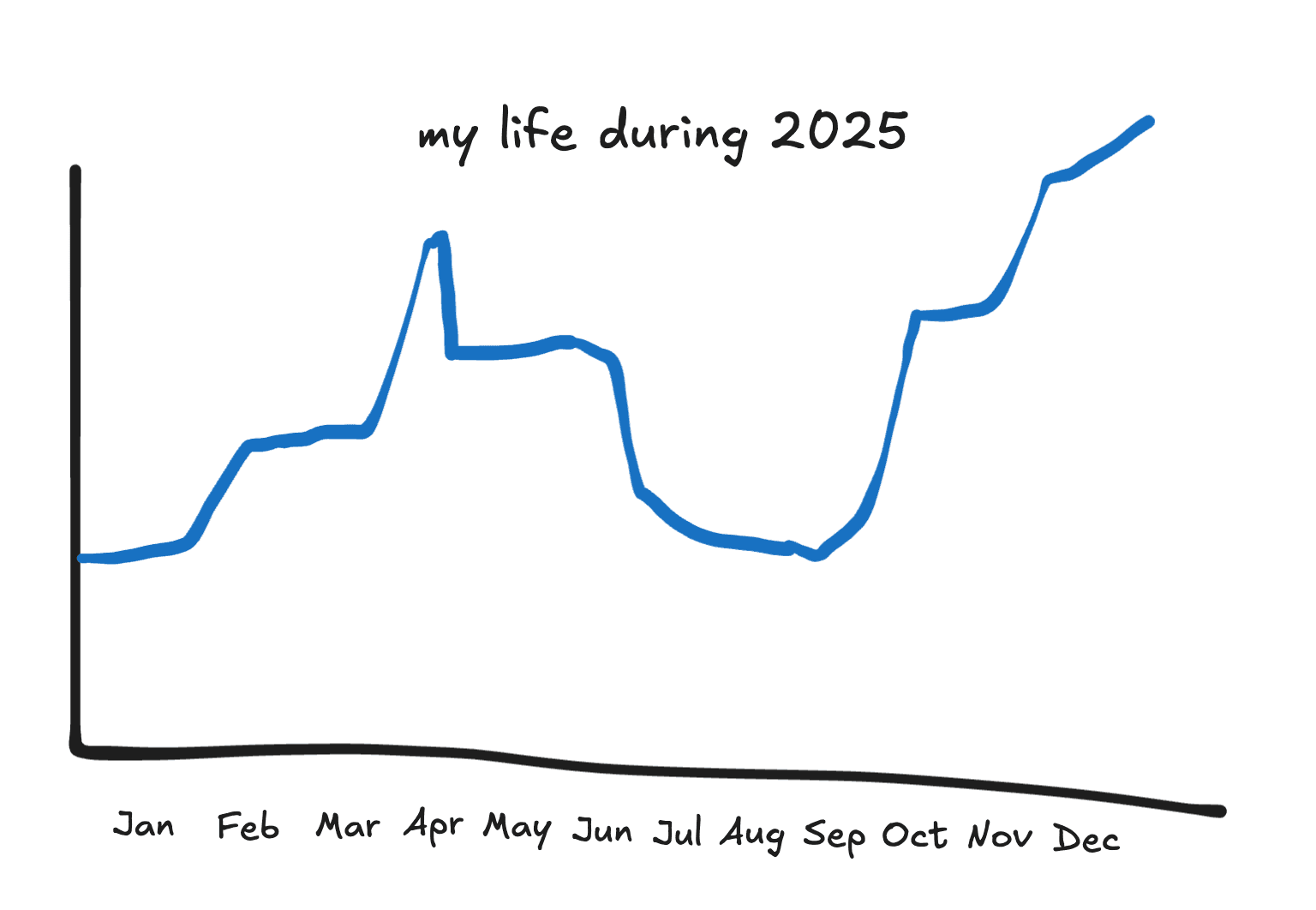
What stands out to you?
What surprised me most about this graph is how non-linear it is. Over a long life, you will look at every year as a single point. You are not going to look at every month. That's far too granular to remember.
If you look at the year like an atomic unit, you see it started at some point and ended at a point much higher than where it started. You'll think to yourself, "this looks like a great year."
But the closer you look, the more it stops feeling smooth. It builds slowly, with peaks and troughs and peaks and troughs and periods of stagnancy.
All of a sudden, we are at a much higher point than where we started.
Life is non-linear in outcomes. That part is easy to say, but it felt meaningful to see it mapped onto my own year.
Throughout most of the year, I was still doing the same things. I was still working. I was still building projects. I was still posting. The inputs were not that different. Yet the outputs were wildly different. It was ups and downs and ups and downs, and most of those fluctuations will be compressed into a single dot in my memory.
Most of the outcomes that mattered this year were concentrated in a few months. Most of the effort was not.
What happened here? And there?
The first part of the year was defined by uncertainty.
At the start of 2025, I didn't have any internship offers. I was worried about co-op, though in hindsight, part of that worry was irrational. I was not worried that I would not find anything. I was worried that I would not get the best thing.
I wanted the most prestigious offer. I wanted to feel ahead. Looking back, that was mostly ego.
January and February were a grind. I started posting on X for the first time. I went to every hackathon I could, and won all of them.
During these months, my sleep schedule was destroyed. I was staying up until 5 am most days, not even only for hackathons, sometimes just for side projects. Every time I built a project, I'd make a post on X and LinkedIn.
I skipped most of my classes. I think I went for the first week and then never showed up again.
Nothing gained meaningful traction during this time. Then, March happened.
Going viral
Some time near the end of March, I went to yet another hackathon. We built a project that let you turn sketches into 3D models, which was somewhat of a newer interface compared to the existing text-to-3D tools out there.
As with my other projects this year, I made posts about it on both X and LinkedIn. This time, they went viral.
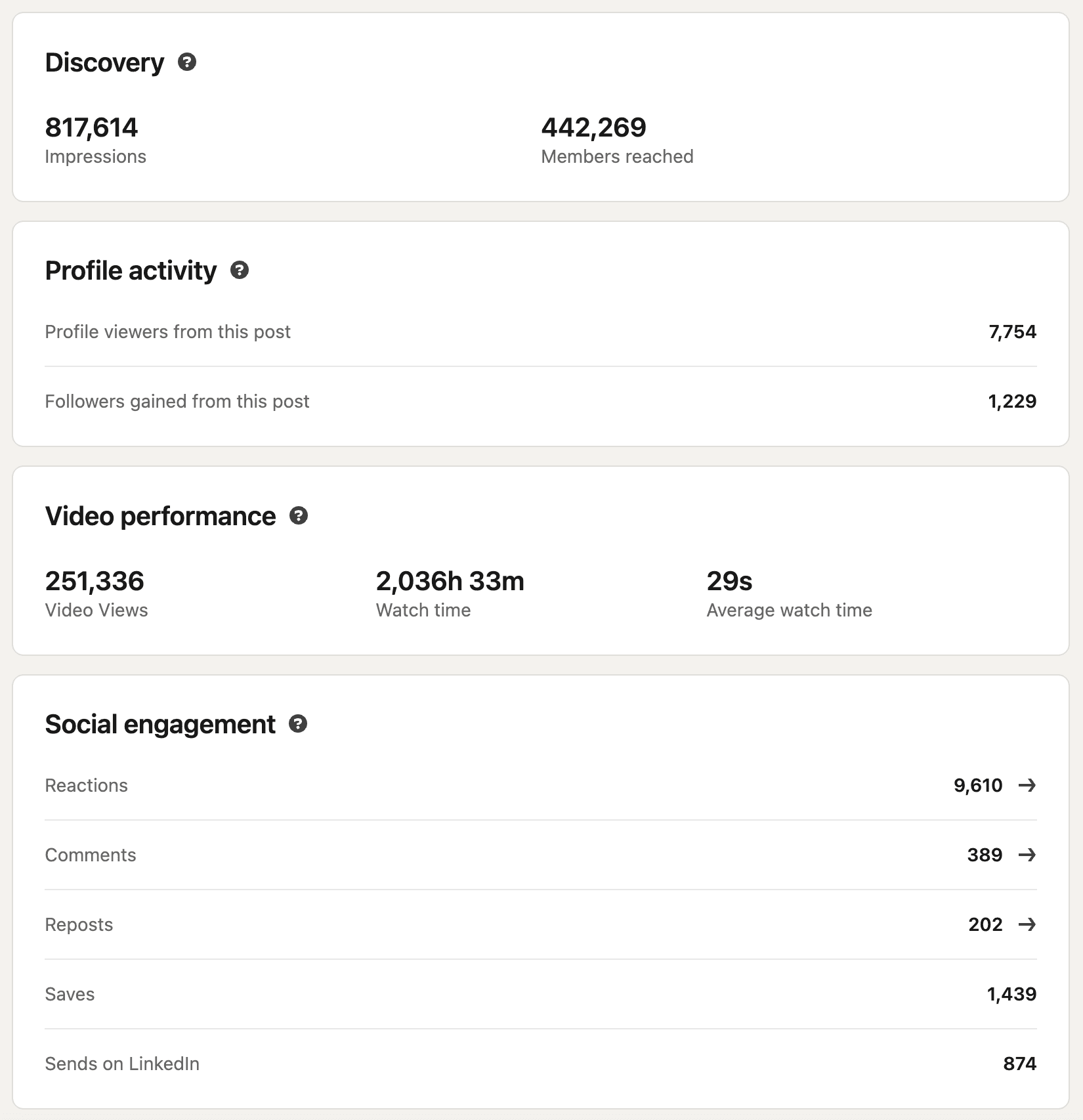
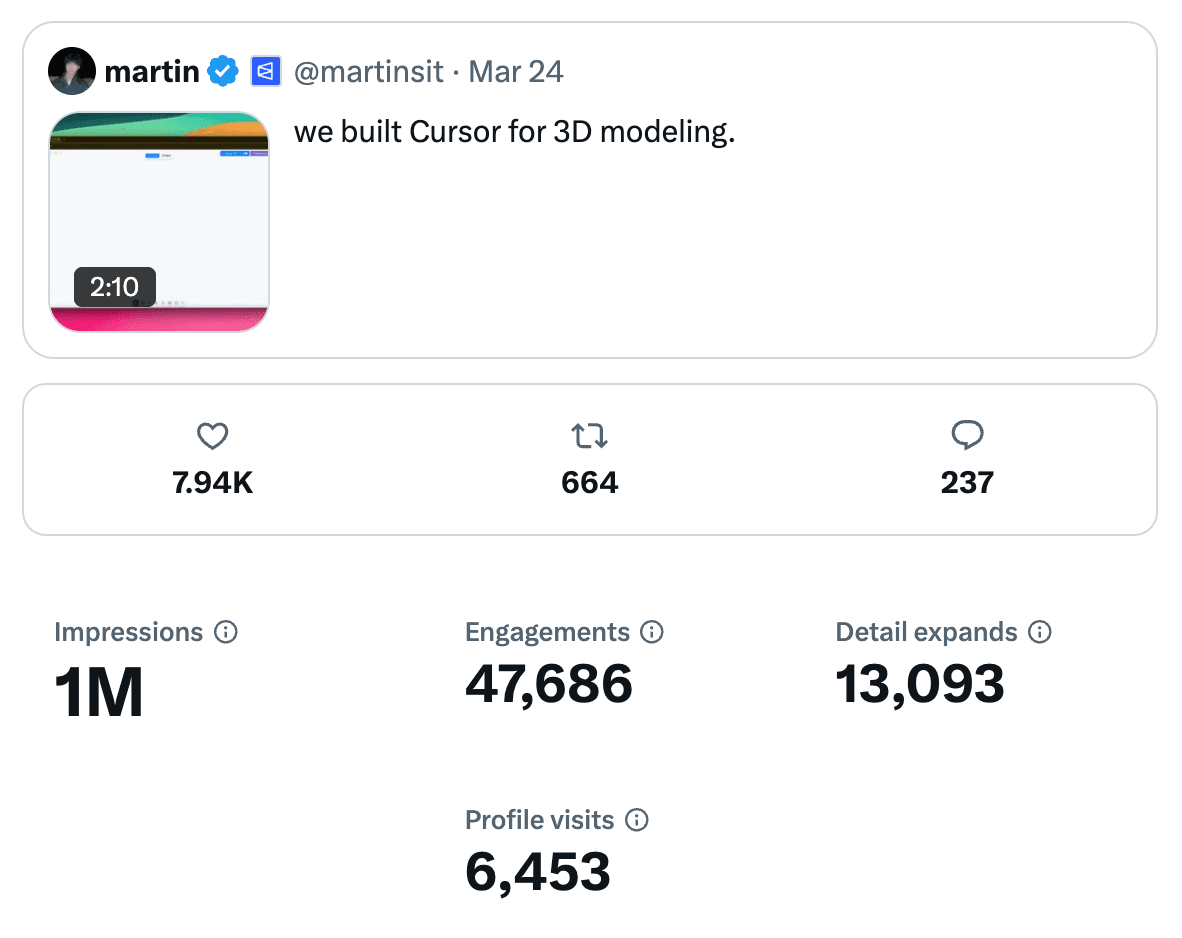
In less than a week, I went from 240 to 4,000 followers on X and my email inbox began to blow up.
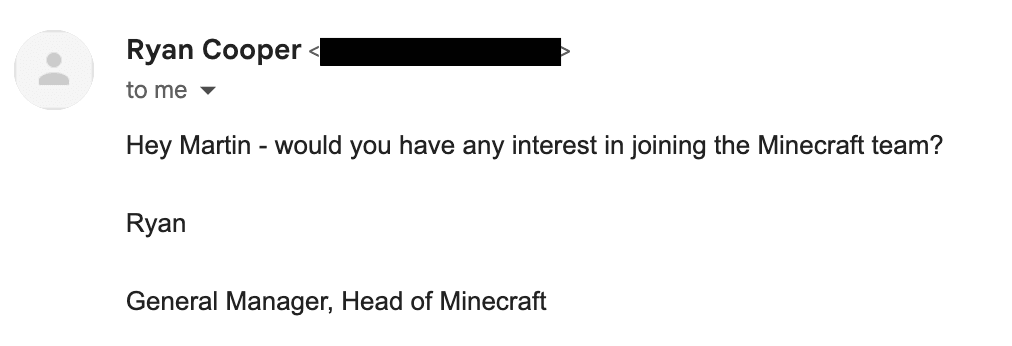
I started receiving emails and DMs from founders, VCs, CEOs — from firms like Sequoia and a16z to people like Roy Lee 😂
I also had some companies reach out about joining them.
What is easy to miss, looking only at the spike, is that the project was not dramatically better than my previous ones. It just happened to be the one that hit the algorithms.
Did I get lucky? 100%.
I don't think this project was the greatest display of my technical ability and craft.
What people miss when they look at this project is that it did not go viral because it was my best project. It went viral because I had been building in public for months.
I have come to realize that this is how most real progress looks. All the effort happens in the quiet parts where it feels like nothing is moving. Then suddenly there is a spike.
I keep coming back to the phrase “slowly and then all at once,” because it describes the emotional experience too. When you think you are going nowhere, you are often just early.
Summer
During the summer, I did my first co-op at Shopify. I made a lot of great friends and experienced the Big Tech life. More on that in this section.
Sidequestmaxxing
September to December was a blur.
Yesterday, I was talking with my friends about the timeline of those four months, trying to piece together what actually happened. We kept stopping mid-sentence and saying some version of, "Wait, that all happened this term?"
It felt genuinely absurd how much was packed into such a short stretch of time. Those four months alone could probably be their own story.
The best way I can describe that period is sidequestmaxxing.
I was barely a week into the term when I joined Polymarket, completely unplanned. Around the same time, I ended up winning Hack the North as a stage finalist, which was surreal.
During this term, I was working full-time while being a full-time student. Early on, I made a promise to myself that I would spend more than half of my weekends off campus.
That promise held, almost accidentally. Apart from finals week, I spent nearly every weekend either in Uptown Waterloo, Toronto, SF, or NYC.
Throughout the term, I skipped midterms. I skipped assignments. I skipped quizzes. I flew to New York instead.


I think I spent more than a quarter of the term living there. That might sound irresponsible written out like this, but it's one of the best decisions I've made.
A side note, New York might be my favorite city in the world. It has a pace that matches how my brain works when it is fully awake. I will probably always find myself drawn back to it. Very excited to spend 2026 in NYC!
Working full-time while being a full-time student pushed me harder than anything earlier in the year. I have come to realize that being pushed hard matters more than I used to think. You do not get stronger by staying comfortable. You get stronger when you are forced to adapt.
I had to build a consistent sleep schedule. I had to learn how to get focused quickly. I was squeezing so much out of every hour that small inefficiencies would mess up my balance of work, school, social life, and sleep.
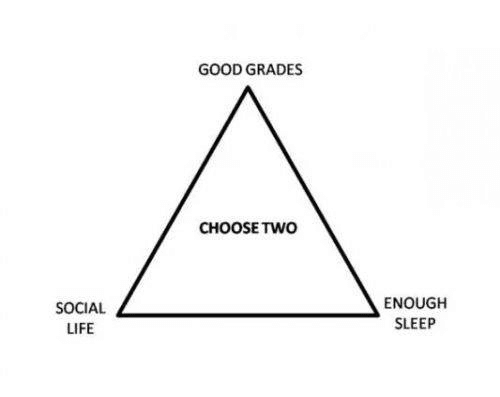
Kind of like this diagram, but include a full-time job too.
Looking back, this was probably the most fun part of my year.
I was barely in my room except to sleep. Almost every other hour was spent out with friends, wandering Uptown, trying every restaurant in Waterloo, doing dumb things like picking the locks of E7 study rooms, or hopping between cities with no real plan. It felt chaotic in the moment, but it also felt alive.
When I place this stretch back onto the graph, it looks like another simple upward move. What the graph does not show is how much of that growth came from saying yes to things that did not obviously fit together at the time. Classes, work, travel, friendships, side quests. None of it was planned. And somehow, it worked.
Good or bad? Maybe.
When I look back at the graph, there is an easy misunderstanding. It looks like effort rising and falling. That is not what it is. It is outcomes. Outcomes and effort do not move in lockstep.
Most of the effort was built in the lows, in the stagnant points, in the flat lines where nothing seemed to be happening. And then, suddenly, there is a spike.
I have come to realize that labeling moments as “good” or “bad” is often premature. How can you label something that is not finished yet?
If you’re not dead, nothing is over. Most moments that feel bad are not failures, they are just unfinished. Given enough time, they tend to bend into something useful, even if it is not obvious what that will be at first.
This reminds me of the Taoist farmer story. I first came across this from Nima's blog.
The horse runs away, and they call it “bad luck.” Maybe.
The horse comes back with wild horses, and they call it “good luck." Maybe.
The son breaks his leg, and they call it “bad luck". Maybe.
War breaks out and he avoids the draft, and they call it “good luck." Maybe.
Every point on the graph, these highs and lows, is a maybe.
The Cost of Negativity
Negative sum
Everything that irritates us about others can lead us to an understanding of ourselves.
I have been thinking about negativity this year.
I think hating is part of human nature. I also think it is contagious. Earlier in the year, I noticed how easily it can creep in through environment and tone, not always loudly, sometimes just as background noise.
It can be entertaining in the short term. Sometimes it feels good to judge someone else. Sometimes it even feels like a way of bonding. Yet it is such a strange trade. You buy a few seconds of entertainment and you pay with your ability to move forward.
I have come to realize that a lot of hating is self-projection. You are highlighting something you do not like about yourself and trying to paint it onto someone else.
It also shows up in status-obsessed environments. At Waterloo, people often prescribe their worth based on internships, and then project that onto others. It becomes a reflex. People treat someone else's outcome as proof of their own worldview. The whole thing feels like a tax on your focus.
Be radically optimistic
Optimism removes the ceiling. I have always leaned toward radical optimism. There is a quote from Henry Ford, "whether you think you can or cannot, you are right" — and even though it sounds cheesy, I have found it true in practice.
When I started on X, I assumed something would work eventually. I did not know when. But I assumed the best-case scenario was possible, and I behaved like it was.
I have realized that pessimism often disguises itself as realism. It is easy to say “that won’t work” and call it prudence. Yet the truth is that many things in life are asymmetric. A single action can change everything. If you self-reject early, you cap your upside before reality even gets a chance to respond.
Negativity is friction because it makes you self-conscious. It makes you over-index on judgment, real or imagined. And when you are afraid of being judged, you do less. That is the most expensive outcome of all, because doing less means you reduce your surface area for anything good to happen.
My goal for 2026 and beyond is to reframe everything in a positive light.
High agency beats high potential
Proof of work beats permission
Last year, I wrote about agency. The lesson did not change this year.
Building in public is high agency. Posting on X, posting on LinkedIn, cold emailing, putting yourself out there, these are all ways of refusing to wait for permission. You are not waiting for a job application pipeline to notice you. You are not waiting for someone to grant you legitimacy. You are just showing proof of work.
For instance, I cold emailed Farhan Thawar this year, head of engineering at Shopify, after I got the interview. I really wanted the job, and I did not want to leave it to chance. I emailed him and asked how I could make sure I passed. In hindsight, it is a simple thing, but it reflects a mindset I want to keep. If you care, act like it.
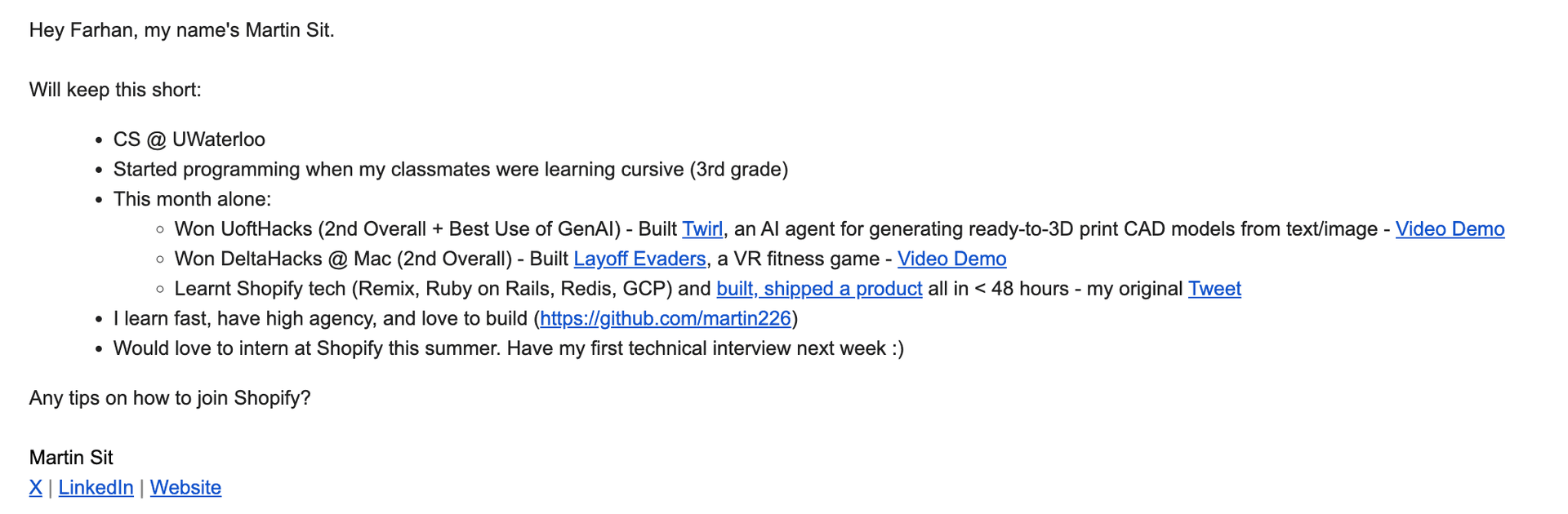
Say yes
Polymarket also came from agency, even if it was not mine at first.
It also came from a series of coincidences that, looking back, feel incredibly lucky.
Around that time, I was working on a prediction market project on my own. I never finished it. I never showed it to anyone. It had nothing to do with how I ended up joining Polymarket. Quite the coincidence though.
- My friends and I attended an event in Waterloo organized by Z Fellows
- We ended up talking to Sonith, and he mentioned casually that he saw some predictions markets were hiring
- WZ, hearing this, mentioned he saw a job posting for an internship at Polymarket
HZ sent a cold email. Then everything happened very quickly.
Shayne Coplan, the CEO of Polymarket FaceTimed him. There was less than 24 hours’ notice. They wanted him to fly out the next day. He called me and said, “Start packing, you’re flying tomorrow.”
I remember how absurd it felt. It was a Monday. We had classes. I had signed up for Hack the North, which was happening that weekend. None of it made sense.
I said yes anyway.

We Ubered from Waterloo back home. The next day we woke up at 3 am, Ubered to the airport, and flew out for the work trial.
Looking back, it's one of the craziest things I have done, and it was only possible because we did not overthink it.
I considered skipping Hack the North. We were already in New York. Flying back, going straight to Waterloo, and dealing with the logistics sounded exhausting. All that just to show up 16 hours into the hackathon?
I did it anyway.
I flew back to Pearson, Ubered straight to Waterloo, brought my luggage into E7, and hacked for the remainder.
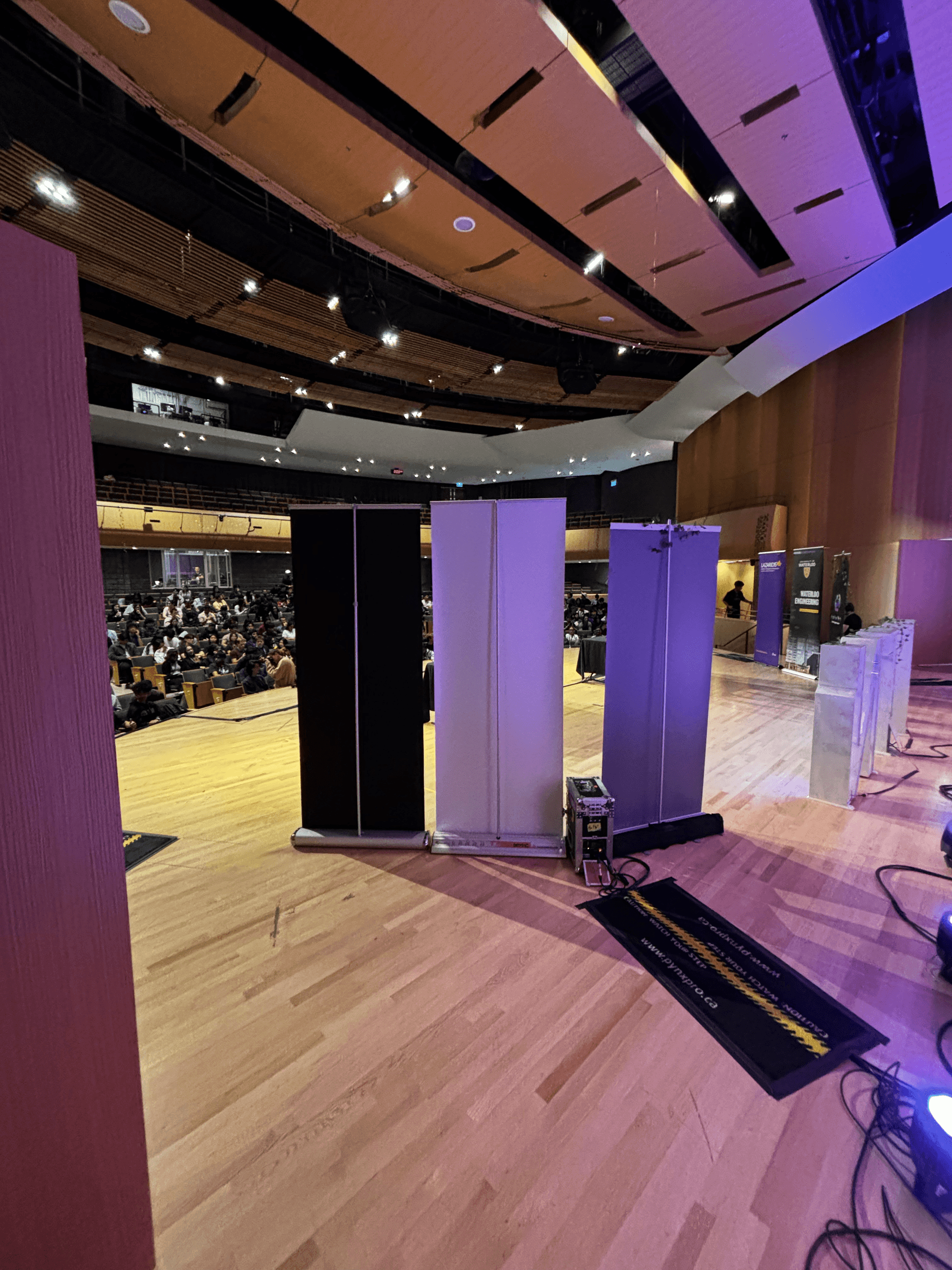
We won. I was on stage at Hack the North with a suitcase nearby. It still feels unreal to write that sentence.
I have realized that you cannot get lucky without doing spontaneous things.
And beyond the big moments, the same principle shows up in smaller ones. Random plans with friends. Weekends spent off campus. Picking up running again consistently, all because we randomly decided to go for runs in New York.
Action vs credential
There is also a more pragmatic lesson here that I keep noticing. Action beats credential. I have not had a single company ask about my GPA this year. People ask what I built. What I shipped. What I can do. Proof of work has been the only currency that consistently mattered.
Leverage is not the same as effort
High leverage habits
One of my biggest takeaways this year is leverage.
People love talking about routines, small habits, getting every tiny thing right. Making your bed. Perfect morning routines.
In part, I get it. Structure helps.
Yet in the grand scheme of things, these things are low leverage. Life does not care if you made your bed. The world does not hand you upside because you did ten tiny tasks neatly.
Leverage is about identifying which actions actually move the needle, then ruthlessly eliminating everything else.
You can also just not do things
Don't like something? You don't need to do it.
In university, I stopped optimizing for perfect grades. I am not saying grades do not matter at all, but I have realized that lectures, for me, are often a low-leverage activity.
They move at their own pace. Sometimes lectures are too slow, sometimes too fast, and I hate the lack of control. So I stopped going to most of them and studied on my own.
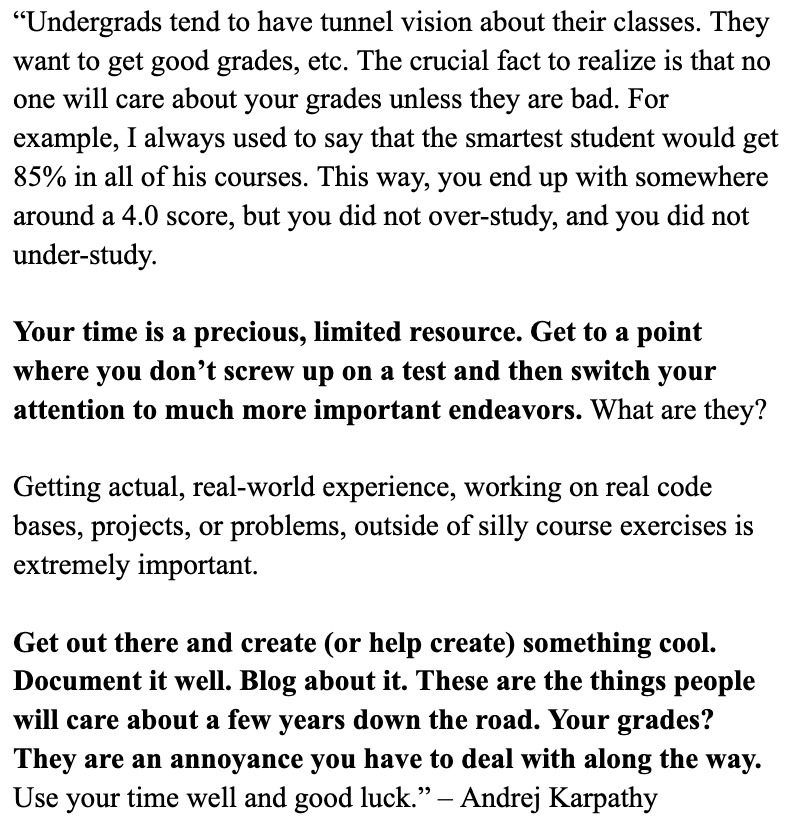
I also did not go to networking events. They feel ungenuine and make me cringe. In hindsight, the best networking I did all year was doing cool things, meeting cool people, becoming friends, and providing value naturally. The relationships that mattered came from shared work and shared time, not name tags and small talk.
Don't feel pressured into doing things because everyone else is doing them. Is the goal to be average?
Procrastination is information
I am also a procrastinator. I don't want to pretend otherwise.
Something I read this year that stuck with me is that procrastination is information. Sometimes it means you are not interested. Sometimes it means you do not believe the task matters. Sometimes it means you are avoiding uncertainty.
I try to work with this instead of fighting it. I try to define a few non-negotiables, the highest-impact things, and make sure I do those. Then everything else becomes optional. I still procrastinate, but I procrastinate on lower leverage tasks now, and that is a much better place to be.
Games worth playing
Choosing the game I want to play
At some point this year, I started feeling friction with the path I thought I was supposed to be on.
In software, especially at Waterloo, there are a few common paths. Each comes with its own definition of success, its own incentives, and its own way of measuring progress. None of them are inherently better than the others. They are just different games.
Big Tech and Quant are both impressive games. They reward discipline, consistency, and a very specific kind of excellence. I spent a lot of time genuinely considering them. I even did a personal pros and cons list for all three paths I was seriously thinking about, Big Tech, Quant, and startups.
Nothing about the first two is wrong. They are stable. They are well-defined. They turn effort into predictable outcomes.
But the more I thought about it, the more I realized that predictability was also what bothered me.
What I like about startups is the absence of fixed rules. You can do a bit of everything. You can say something should change and, if you are right, it actually changes. There is less bureaucracy and less performative busywork.
You are rewarded for being direct, for shipping, and for taking responsibility. That environment fits how I like to work right now.
This year also taught me something slightly uncomfortable about myself. I like to work.
In 2024, I used to think the appeal of tech was the comfort, forty hours a week, stable, easy. Medicine sounded terrible because it was hard. Now the part that sounds appealing is the hard part.
I would rather work twelve hours of focused, demanding work than eight hours where only three are real and the rest are Slack, meetings, and waiting. I like deep work. I like speed. I like feeling the day move.
Working at Polymarket made this contrast even clearer. Things move fast. You ship. If something breaks, you roll it back, fix it, and ship again. That culture forces you to think clearly and act decisively. It fits the way I want to grow at this stage of my life.
There is also a more personal layer to this choice. I have always had a quiet fear of mediocrity. Not being bad, just being fine.
And when I laid everything out honestly, I realized I would rather take a low-probability shot at becoming great than a high-probability path to becoming good. Startups feel asymmetric in that way. The downside is real, but the upside is not capped in the same way.
Exiting the Waterloo status game
There is also a shift I have been trying to make, from multiplayer games to single-player games. I am not perfect at this. I still compare myself more than I want to.
Yet I have noticed something. Most people at Waterloo are playing a different prestige game. The moment I shifted toward startups, it got harder to compare, because it is not the same scoreboard. I do not want what most others want, and they do not want what I want.
I have come to realize that you should not care about the opinions of people you do not want to be. That is a trap of status games. You end up optimizing for the judgment of people whose life you do not even want. Prestige, especially in this space, feels like a lagging indicator. If you join a great startup and do great work, and the startup becomes great, prestige arrives later.
This year, I did get offers from Big Tech companies I never expected I would get this early, including companies like Coinbase. A year ago, I would have been satisfied with that outcome as a finish line. Yet I chose Polymarket instead. In part, because I want to take my own beliefs seriously. I do not want to play a game just because it is the default game around me.
Environment changes
Health
One of the biggest changes in my environment this year was who I was surrounded by and what they normalized, and that change reshaped my relationship with health more than anything else.
From January to April, my health was an afterthought. Hackathons, lack of sleep, constant stimulation, staying up until 5 to fool around. Even through the summer, the pattern continued. I used to tell myself I did not need sleep, and that it was genetic.
Earlier in the year, I had almost zero activation energy. I would doomscroll all day out of reflex, and stopping felt impossible. If I wanted to do something productive, it felt heavy. If I wanted to waste time, it felt automatic.
In the fall, my environment shifted.
I started spending time with people who treated health as a default rather than an exception. I got a WHOOP during reading week along with my friends. I went from around 6,000 steps/day earlier in the year to consistently hitting 10,000 by the end. I started doing hours of Zone 2 each week. I hit the gym consistently. I began running again.

My sleep stabilized to seven to eight hours a night, and at regular bedtimes. I stopped eating junk food, fried food, and sugary drinks.
I do not think this shift was purely social. I genuinely care about my health now, and even without a leaderboard I think I would still do it.
Yet the environment mattered because it reduced friction. When the people around you treat health as normal, it becomes normal for you too.
Running, especially, scratched a very specific itch. It is competitive in a single-player way. You are competing against your last run. You can see the one percent improvement. It is ruthless and objective, and I like that.
I also got into a lot of health details that would have sounded ridiculous to me a year ago. Bedtime routines, humidifiers, limiting electronics before bed, supplements.
Some of it might be placebo, and I do not really care. The combined effect of sleep, exercise, diet, and consistency made me feel like my IQ increased by a standard deviation.
Conscientiousness
One of the more surprising outcomes of this term is that, despite working full-time while being a full-time student, my GPA actually went up. I did better in every course than the previous term.
I did not suddenly become more disciplined, nor did I start caring more about grades in some abstract sense. What changed was the environment.
I was surrounded by people who were quietly conscientious. People who (mostly) took finals seriously. People who (mostly) blocked time to study without making a big deal out of it. People who (mostly) treated deadlines as real.
There was a kind of subtle peer pressure at play, in the assumption that you would lock in when it mattered. I found myself matching the local norm without explicitly deciding to.
Stimulants probably helped too.
Defaults
What ties all of this together is how little personal willpower was involved.
Most of the positive changes I associate with this period did not come from some heroic self-control. They came from defaults shifting.
The default was to go to the gym.
The default was to sleep.
The default was to study during finals.
The default was to spend weekends doing things rather than rotting.
Once those became the baseline, resisting them would have taken more effort than going along with them.
I used to think improvement required constant motivation. This year made me question that. Motivation mattered far less than the shape of the environment. When the default behavior changed, my behavior followed.
Looking back, I do not think I became a fundamentally different person this year.
Instead, my environment acted like a filter. It determined which parts of me were allowed to show up consistently.
Bad Advice, Good Advice, No Advice?
This year changed how I think about advice.
Back in March, I got on a call with Blake Anderson, the creator of several apps like Cal AI and Umax, which have made tens of millions of dollars. At some point in the conversation, he started giving me advice, and then almost immediately stopped himself.
His main piece of advice was that I should stop taking advice.
He said something along the lines of: most people are poor at giving advice. Most people do not know your exact situation. Most people carry a lot of biases, often without realizing it.
And because of that, taking advice more often than not leads you to make worse decisions and doubt yourself unnecessarily.
If you do take advice, he said, it should come from a very small trust circle. People who know you well. People who understand your incentives. Everyone else should mostly be ignored.
At the time, this felt slightly extreme. Looking back, it feels mostly right.
I also came across another idea this year that stuck with me: you should only take advice from people who are just one or two steps ahead of you. Not vastly more successful. Not playing an entirely different game. People who are still close enough to remember the problems you are facing today.
That framing helped clarify something I had been feeling but could not articulate.
Advice often fails because it is given across mismatched contexts. Someone who is far ahead is optimizing for a different set of constraints. Their advice might be correct for their world, but misaligned with yours.
Something else I have realized this year is how good humans are at rationalization. You can make almost anything sound reasonable if you explain it confidently enough.
You can retroactively justify decisions. You can wrap intuition in language that sounds like it was carefully reasoned over a long period of time.
Because of that, a lot of advice is not as smart as it sounds. It just sounds complete.
At the end of the day, I have started to think that the most useful shift is not finding better advice, but relying less on advice altogether.
Instead of collecting personalized prescriptions, I try to learn mental models that describe parts of the world accurately.
Advice is often personalized to the giver, shaped by their biases, their timing, their regrets. Mental models are impersonal. You can apply them to your own situation and let the conclusions fall where they may.
This is not a rejection of learning from others. It is just a recognition that most decisions cannot be outsourced. At some point, you have to trust your own judgment, informed by models that actually map to reality.
And when in doubt, it is often better to do something and learn, than to wait for advice that perfectly fits a situation no one else fully understands.
Miscellaneous
Just some random things I thought of:
-
Never split the bill. I stopped splitting the bill with my friends starting September. We take turns paying the full bill instead, whether it's $80 or $800. Dan Ariely's "Predictably Irrational" talks about taking turns with bills rather than splitting them.
tldr; the "pain of paying" is relatively insensitive to the amount we pay, and we feel no such pain when we don't pay. So logically, one person should pay for the full bill each time!
- Delete social media apps from your phone. I deleted X, LinkedIn, and Instagram, and forced myself to use them from my laptop only. I also stopped constant shitposting on X. I realized my goal of using X was to create opportunities, not to waste time.
- Information gathering is procrastination. Consuming can feel productive but after a certain point, it becomes a waste of time. I felt like I spent too much time this year gathering information rather than taking action. I want to create more than I consume.
- Supplements. I take vitamin D3, creatine, tongkat ali, zinc, omega-3 fish oils, magnesium biglycinate, and ashwagandha.
Outlook for 2026
Here is my north star for 2026:
- Create more than I consume. I want to stop hiding behind information gathering. I want to spend more time building, creating, shipping.
- Health. I have a $10k bet on gaining 20lb in the next eight months. I want to run a half marathon. I want my resting heart rate down to sub-45.
- Build projects with friends, and travel. Switzerland, hiking in the Alps, learning to ski, doing fun shit.
- Eventually be a founder. I do not know if 2026 is the year for that. But I want to keep moving toward it.
If 2024 was about learning who I am, and 2025 was about taking action, then 2026 will be about focus and intensity.
I said this about 2024, and I might say it again next year, but right now 2025 feels like the best year of my life.
I'm excited to see what 2026 brings.